
Quantitative research and trading engineering, held to the standard of evidence.
Algorithmic Sciences validates trading strategies and builds the research, execution and risk systems around them, for firms that run capital systematically or want to.
Discuss a project See what we build
Founded in 2017 by Ben Racz, Professor of the Practice in Quantitative Finance and Algorithmic Trading at Carnegie Mellon University from 2023 to 2025.
An idea is wrong until data it has never seen says otherwise.
Clients bring us a strategy to validate, a desk to automate or a stack to connect. We take it to the standard we apply to our own research: costs in every test, no flattering position sizing, small search spaces, and out-of-sample data that stays untouched until the end. Read the research standard.
What we build and review
- Strategy validationFormal procedures that decide whether a strategy has an edge before capital depends on it.
- Research infrastructureThe machinery that lets a team test ideas at scale and reproduce every result.
- Portfolio constructionCombining strategies so the portfolio holds up when single strategies do not.
- Order and execution managementOrder and execution systems that cut cost and keep flow acceptable to counterparties.
- Risk and monitoringMeasuring exposure, impact and behaviour, and acting on it by rule.
- Integration and automationConnecting brokers, venues and data, and taking manual steps out of the workflow.
equities, futures, currencies, options, rates, and crypto assets.
The methods do not depend on the asset. We work from daily bars down to tick and order book data.
How an engagement runs
Review
We read the existing research, code and trading records, and say plainly what holds up.
Specification
We agree what will be built, how it will be tested, and what result counts as success.
Build
Research, infrastructure or integration work, delivered in stages your team can inspect.
Validation
Results are checked on data the work never saw, with costs included.
Handover
Documentation and procedures your team can run, or continued monitoring by us.
Selected work
- 35,000
- live trading accounts under an automated risk management system built for a US proprietary trading firm and CTA
- 80–90%
- lower spread costs on buy-side currency execution, from a spread prediction model
- 2 million
- backtests per hour on each server of a distributed grid, on commodity hardware, without GPUs
- 7 µs
- from new tick to order on the critical path of an execution stack running more than 100,000 strategies across venues
Engineering figures from client and in-house systems. Clients are not named, and this site shows no trading returns.
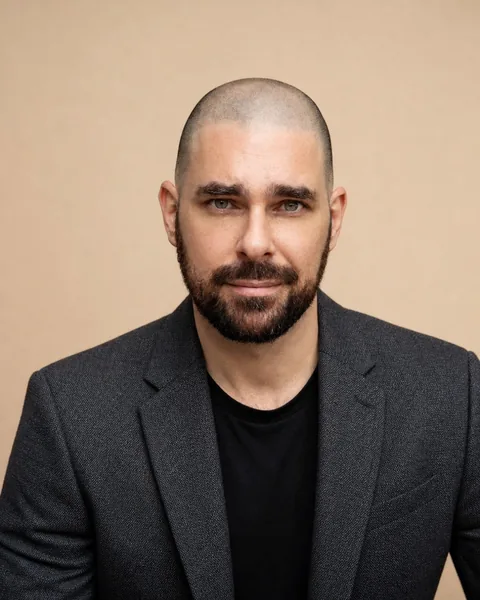
Led by Ben Racz
Founder, Managing Director and Head of Quantitative Research
- Professor of the Practice in Quantitative Finance and Algorithmic Trading, Carnegie Mellon University College of Engineering, 2023 to 2025
- Co-author of Humanity’s Last Exam, published in Nature in 2026
- Co-founder of IATACF, author of its 52 courses and 15 credential programmes
- Built and led a global team of 21 scientists, engineers and consultants
- Former Director of Security at a NASDAQ-listed company
Internships
For traders, developers and researchers early in their careers, with routes to prepare through IATACF, with and without programming. How internships work
Mentorship
Through IATACF, whose capstones are assessed work with written feedback, in some programmes from our founder. How to get feedback on your work
Library
The published papers behind our methods, from the Kelly criterion to data-mining bias in backtests. Read the library